
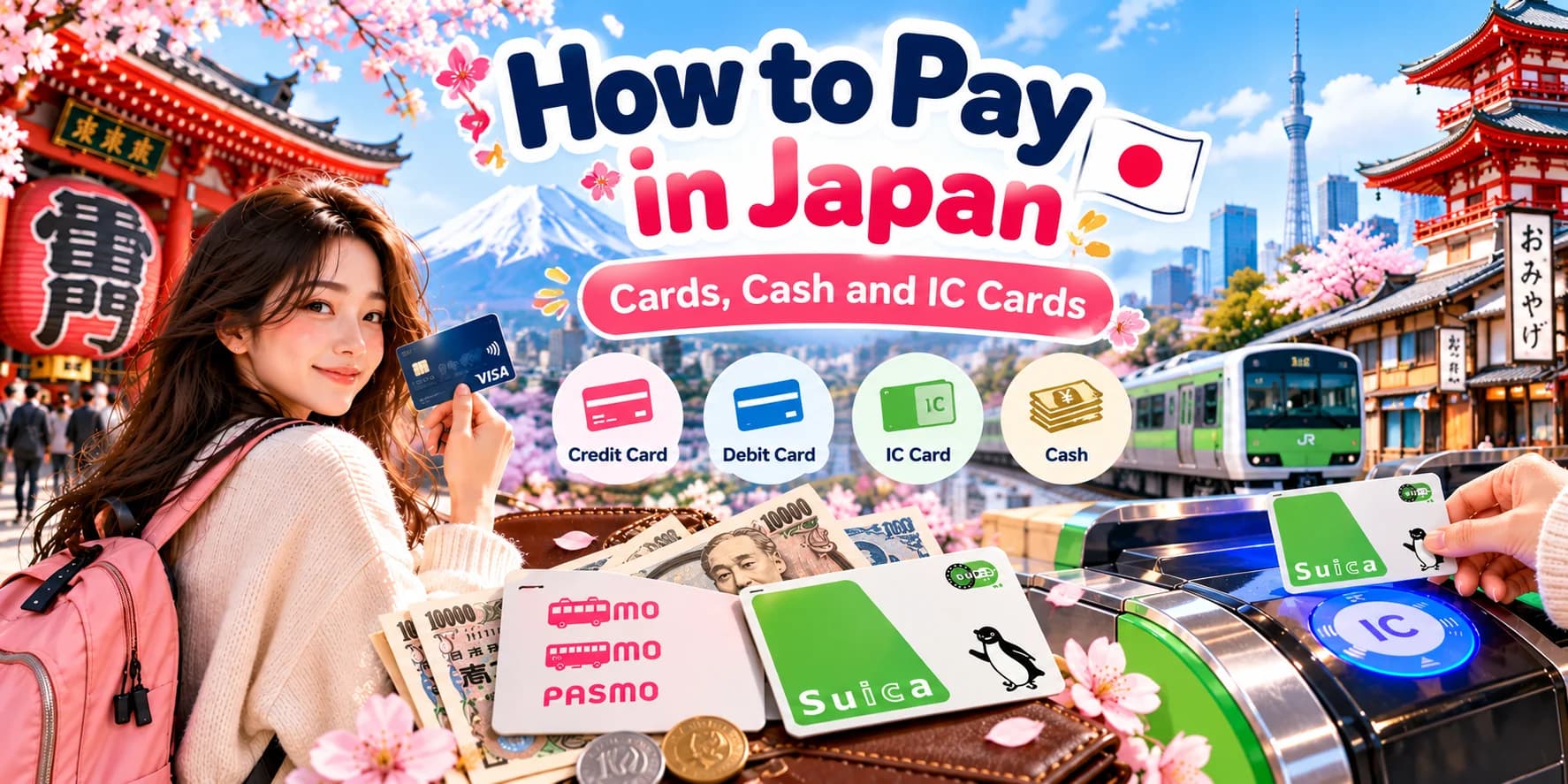
How to Pay in Japan: Cards, Cash and IC Cards
A practical guide to paying in Japan with credit cards, Japanese yen cash, and IC cards, with useful tips to prepare before your trip.
What Is the Best Way to Pay in Japan?
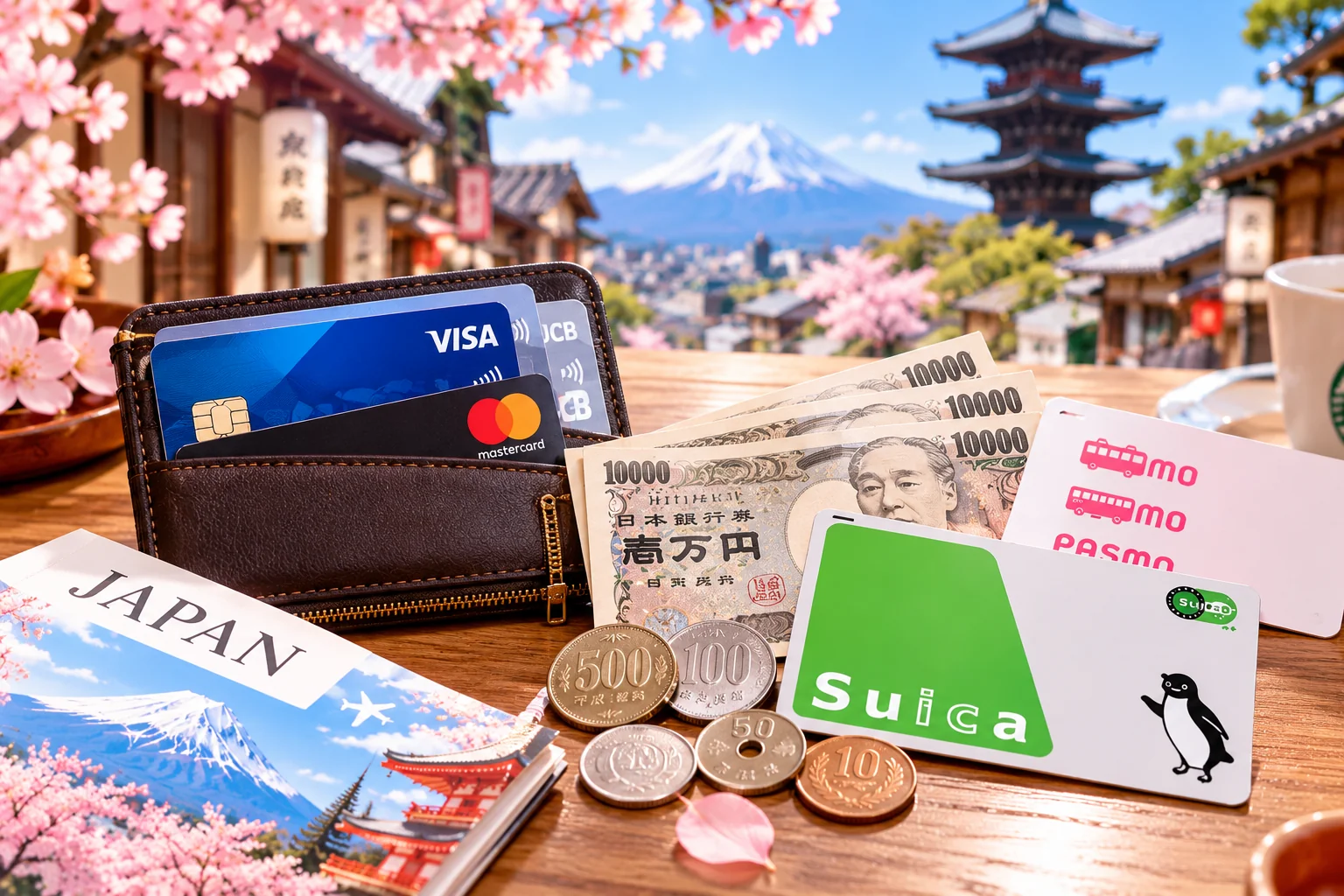
Japan supports several payment methods, including credit cards, debit cards, cash, and IC cards for transportation and purchases at participating stores.
In major cities such as Tokyo, Osaka, and Kyoto, many restaurants, hotels, department stores, and large retailers accept credit cards. However, some small shops, local restaurants, and businesses in rural areas may accept cash only.
For Thai travelers, the most convenient approach is to carry a combination of credit or debit cards, Japanese yen in cash, and an IC card. This provides greater flexibility when traveling and making payments throughout Japan.
Can You Use Credit Cards in Japan?
International credit and debit cards are accepted at many establishments throughout Japan. Commonly accepted payment networks include:
-
Visa
-
Mastercard
-
JCB
-
American Express and other networks, depending on the merchant
Credit cards are generally suitable for paying for hotels, shopping, dining, and other major travel expenses, particularly in large cities.
Before making a payment, check which card networks the establishment accepts. Even if a store accepts credit cards, it may not support every card network.
Prepare Your Credit Card Before Traveling
Before leaving Thailand, we recommend checking the following:
-
Your card is enabled for international transactions.
-
Your available credit limit is sufficient for your planned expenses.
-
You know your card PIN if it may be required.
-
You understand foreign transaction fees and exchange rates.
-
You know how to contact your bank if your card is blocked or lost.
-
You have a backup card, if possible.
If a payment terminal allows you to choose between Thai baht and Japanese yen, check the exchange rate and any applicable fees before confirming the transaction. Paying in Japanese yen will generally help you avoid the merchant's or payment provider's dynamic currency conversion, although your card issuer may still apply its own exchange rate and fees.
Should You Carry Cash in Japanese Yen?
Yes. It is advisable to carry some Japanese yen in cash. Although cashless payments are increasingly common in Japan, some businesses and services still do not accept credit cards or mobile payments.
Cash is useful for:
-
Small restaurants and local shops
-
Certain tourist attractions
-
Some transportation services
-
Vending machines and businesses that do not accept cards
-
Topping up IC cards at ticket machines that accept cash only
You do not need to carry all your spending money in cash for the entire trip. Instead, bring a reasonable amount based on your itinerary and expected expenses.
If you plan to visit smaller cities, rural areas, or natural attractions, check the payment methods accepted by your accommodation, restaurants, and transportation providers in advance.
Should You Exchange Japanese Yen Before Leaving Thailand?
You can exchange some Japanese yen in Thailand before departure so that you have cash available when you arrive in Japan. This is particularly useful for meals, transportation, and other initial expenses.
Another option is to withdraw Japanese yen from an ATM in Japan when needed. Compare exchange rates and applicable fees across the available options before deciding.
For most tourists, a practical approach is to carry some cash while using a credit or debit card for major expenses.
Where Can You Withdraw Cash in Japan?
Travelers can withdraw Japanese yen from ATMs in Japan if their overseas bank cards and issuing banks support the service.
Seven Bank ATMs
Seven Bank ATMs are available at 7-Eleven convenience stores and other locations, including some airports and railway stations.
These ATMs support many international card networks, although availability depends on your card type and the conditions set by your card issuer.
Official website: https://www.sevenbank.co.jp/intlcard/
Japan Post Bank ATMs
Japan Post Bank ATMs also support certain international card networks. Check the accepted card symbols on the ATM before making a transaction.
Official website: https://www.jp-bank.japanpost.jp/en/ias/en_ias_index.html
Before withdrawing money, check the fees charged by both the ATM operator and your card-issuing bank. You should also check the withdrawal limit, as this may vary depending on your card and bank.
What Is an IC Card?
An IC card is a prepaid card that can be used to pay transportation fares and make purchases at participating stores and businesses.
Popular IC cards include:
Suica
Suica is an IC card issued by JR East and is widely used for transportation in Tokyo and other supported areas.
PASMO
PASMO is another IC card that can be used on compatible transportation networks and at participating merchants.
Japan also has regional IC cards, such as ICOCA in the Kansai region.
These cards make traveling more convenient because you can tap your card at ticket gates instead of purchasing a separate ticket for every journey. They can also be used for small purchases at selected stores.
However, acceptance depends on the transportation system, route, and participating merchants. Check compatibility before using your card in an unfamiliar area.
What Can You Pay for with Suica and PASMO?
In addition to paying for train and bus journeys on supported networks, IC cards can be used at various locations, including:
-
Participating convenience stores
-
Vending machines displaying the IC payment symbol
-
Participating shops and restaurants
-
Certain coin-operated lockers
-
Other services displaying a compatible IC card symbol
Look for the IC card logo or ask the staff before making a payment, as not every store or service accepts Suica or PASMO.
How Can Tourists Buy an IC Card?
Tourists can check for IC card sales at designated service counters, ticket machines, or railway stations, depending on the card type.
Special cards for international visitors, such as Welcome Suica and TOURIST PASMO, have different conditions from standard IC cards. Check the validity period, purchase locations, and latest requirements with the relevant provider before buying.
Many standard IC cards require a refundable deposit when purchased. Some special tourist cards do not require a deposit, depending on the card type and applicable sales conditions.
How Do You Top Up an IC Card?
You can generally top up an IC card at compatible ticket machines or charging machines in railway stations.
The typical process is as follows:
-
Place or insert your card in the designated area.
-
Select the top-up option.
-
Choose the amount you want to add.
-
Pay using a supported payment method.
-
Take your card back and check the remaining balance.
Many top-up machines accept cash, so it is useful to carry Japanese yen banknotes or coins.
Mobile top-ups depend on the type of IC card, your phone model, and the systems supported by your device.
Before traveling, check whether the IC card you plan to use is compatible with the cities and transportation networks included in your itinerary.
Can You Use Apple Pay or Google Pay in Japan?
Compatibility with mobile payment services depends on your device model, the country where your payment card was issued, and the systems supported by the merchant or service provider.
Although contactless payments and QR code payments are becoming more common in Japan, you should not assume that every mobile wallet or payment app from Thailand will work everywhere.
If you plan to use Mobile Suica or Mobile PASMO, check the device requirements and service conditions on the official website before setting up your account.
For greater peace of mind, prepare a credit card, Japanese yen in cash, and an IC card as backup payment options instead of relying entirely on your phone.
What Is the Difference Between Cash, Credit Cards, and IC Cards?
Credit or Debit Cards
Best for: Hotel bills, restaurants, department stores, shopping, and major expenses at establishments that accept cards.
Things to consider: Some businesses may not accept every card network, and your bank may charge foreign transaction fees.
Japanese Yen in Cash
Best for: Local shops, small restaurants, and places that primarily accept cash or do not support cashless payments.
Things to consider: Avoid keeping all your cash in one place. Divide your money and store it securely.
IC Cards
Best for: Transportation on supported networks and small purchases at participating stores.
Things to consider: Your balance can only be used within compatible systems, and topping up your card may require cash.
For travelers visiting several cities, using all three payment methods together is often more convenient than relying on just one.
How Much Cash Should You Bring to Japan?
There is no single amount of cash that is right for every traveler. The amount you need depends on the length of your trip, the cities you visit, your accommodation, and your spending habits.
Before departure, estimate the expenses for which you may need cash, such as:
-
Food and drinks
-
Transportation services that do not accept cards
-
Local shops
-
IC card top-ups
-
Emergency expenses
Prepare enough cash for these expenses and use your credit or debit card where appropriate.
If you plan to visit rural areas or smaller cities, consider carrying more cash than you would for a trip focused exclusively on major city centers.
Prepare Your Payment Methods Before Traveling to Japan
Before leaving Thailand, we recommend checking the following:
-
Your credit or debit card is enabled for international use.
-
Your credit limit and card PIN are ready for use.
-
You understand the fees and conditions for overseas withdrawals.
-
You have some Japanese yen in cash.
-
Your IC card is suitable for the cities and routes in your itinerary.
-
You know how to top up your IC card.
-
You have your bank's contact information in case your card is lost.
-
You keep some of your cash and cards separately as a precaution.
Preparing several payment options can reduce stress during your trip and help you adapt when you encounter stores or services that do not support your usual payment method.
Summary: How Should You Pay in Japan?
Japan offers a variety of payment methods, including credit cards, debit cards, cash, and IC cards. However, acceptance can vary by merchant, location, and service provider.
For Thai travelers, we recommend the following combination:
Credit or Debit Cards
For major expenses, including hotels, shopping, and payments at establishments that accept cards.
Japanese Yen in Cash
For local businesses and services that primarily accept cash.
IC Cards
For transportation and small purchases within supported networks and participating stores.
Preparing all three payment options in advance gives you greater flexibility when managing your travel expenses and makes getting around Japan more convenient.
Explore More Japan Travel Guides
Planning a trip to Japan? Explore our Japan travel guide for popular destinations and helpful travel preparation tips.
Plan Your Trip to Japan with Yahweh Booking
Yahweh Booking helps make travel planning easier with flight bookings, hotel reservations, travel insurance, and useful information to help you prepare for your journey.
Start planning your trip to Japan with Yahweh Booking today.
Payment methods, IC card availability, card sales locations, and ATM withdrawal conditions may change. Always check the latest information and requirements with the relevant service providers before traveling.