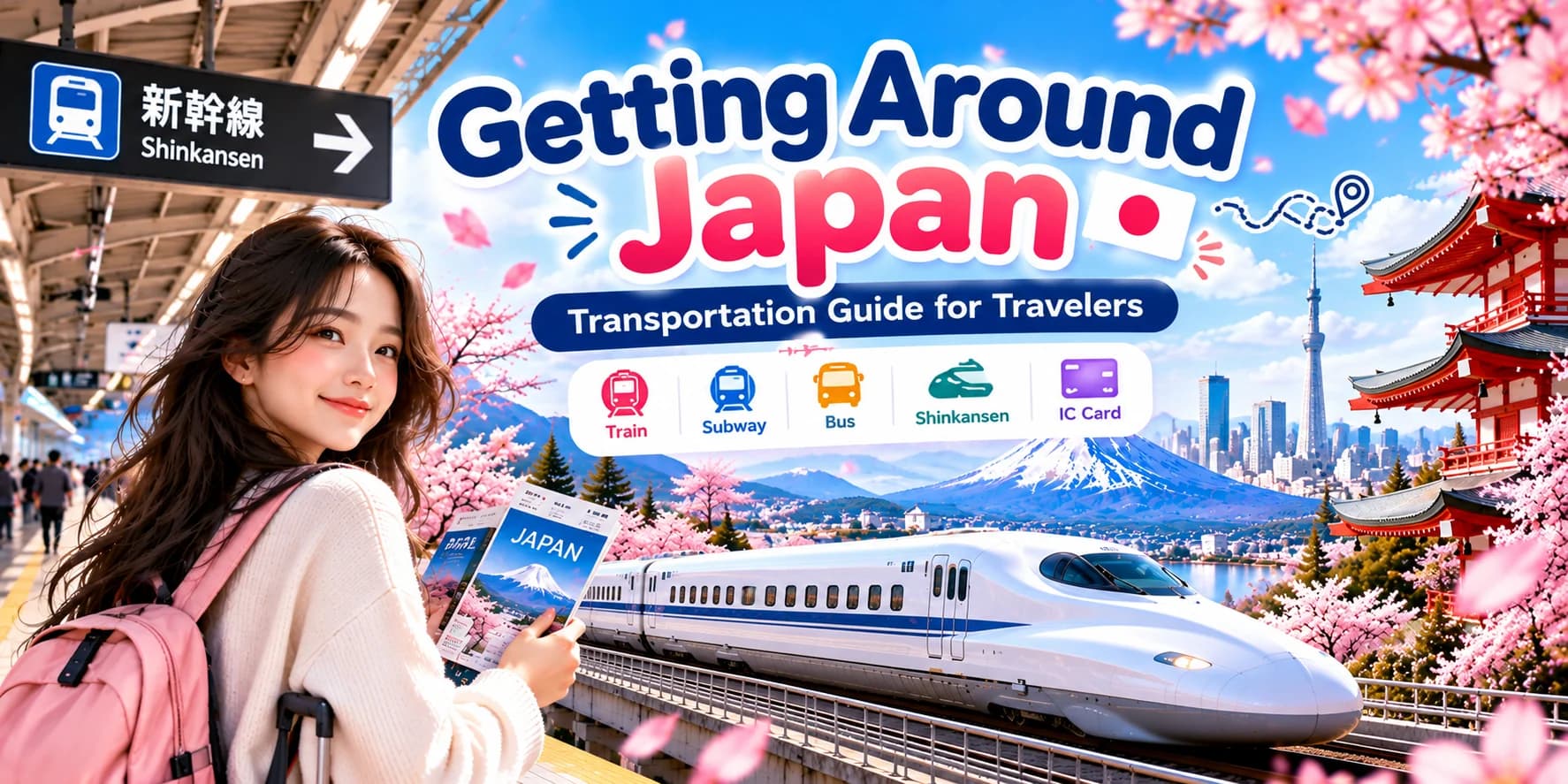
Getting Around Japan: Transportation Guide for Travelers
A practical guide to getting around Japan by train, subway, bus, Shinkansen, and IC cards, with useful tips for planning your trip.
How to Get Around Japan: A Complete Guide to Transportation
Japan has an extensive and efficient public transportation network, including trains, subways, buses, high-speed trains, and taxis. These options make it easy for travelers to get around cities and travel between different regions of the country.
For first-time visitors, knowing which type of transportation to use is only part of the planning process. It is also important to understand where your destinations are located, which routes are the most convenient, and which tickets or transportation passes offer the best value for your trip.
Trains in Japan
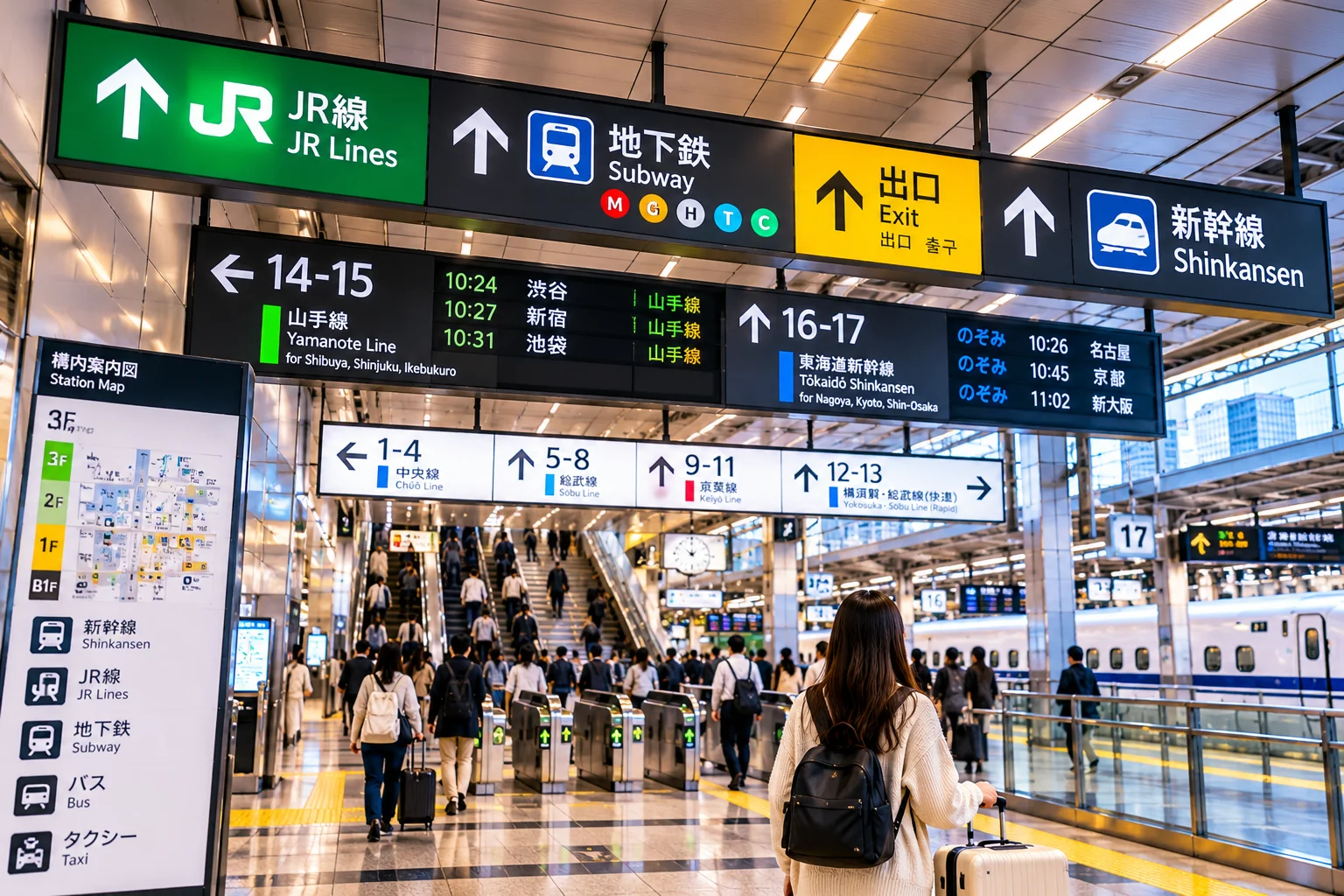
Trains are one of the main forms of transportation for travelers in Japan, particularly in major cities such as Tokyo, Osaka, and Kyoto.
Each city may have several railway operators, including JR, Tokyo Metro, and private railway companies. As a result, train lines, station names, routes, and fares can vary depending on the operator.
Before boarding, check your departure station, destination, train line, and any required transfers. This will help reduce the risk of taking the wrong train or getting off at the wrong station.
Subways in Japan
Subways are ideal for getting around major cities, especially Tokyo and Osaka.
They provide convenient access to many tourist attractions, restaurants, shopping districts, and popular neighborhoods. Many stations are located within walking distance of major attractions.
However, large cities often have multiple interconnected railway and subway systems. Check which line you need to take and whether you must transfer between different railway operators before starting your journey.
What Is the Shinkansen?
The Shinkansen, commonly known as Japan's bullet train, is one of the most popular ways to travel between cities.
Major Shinkansen routes include:
-
Tokyo → Kyoto
-
Tokyo → Shin-Osaka
-
Tokyo → Nagoya
-
Shin-Osaka → Hiroshima
-
Tokyo → Sendai
Japan has several Shinkansen lines connecting different regions of the country. Train services and stopping patterns vary by route.
For example, the Tokaido Shinkansen offers three main service types: Nozomi, Hikari, and Kodama. Nozomi services generally stop at fewer stations and offer the fastest journey times, while Hikari and Kodama services make more stops.
Before booking, check the departure time, arrival station, travel duration, and ticket conditions for your chosen service.
What Are the Different Shinkansen Seat Types?
Shinkansen tickets generally offer the following seating options, although availability and arrangements may vary by route and train.
Non-reserved Seat
Non-reserved seating allows you to sit in any available seat in the designated non-reserved cars.
This option is suitable for travelers who have flexible schedules and do not need a specific seat.
Reserved Seat
Reserved seating allows you to select or receive an assigned seat in advance.
It is a good option for travelers who prefer certainty, especially during busy travel periods or when traveling with family and friends who want to sit together.
Green Car
The Green Car is the premium seating class on many Shinkansen services. It generally offers more spacious seating and additional comfort compared with standard-class seating.
Available seat types, reservation rules, and services depend on the railway line and train you choose.
What Is an IC Card?
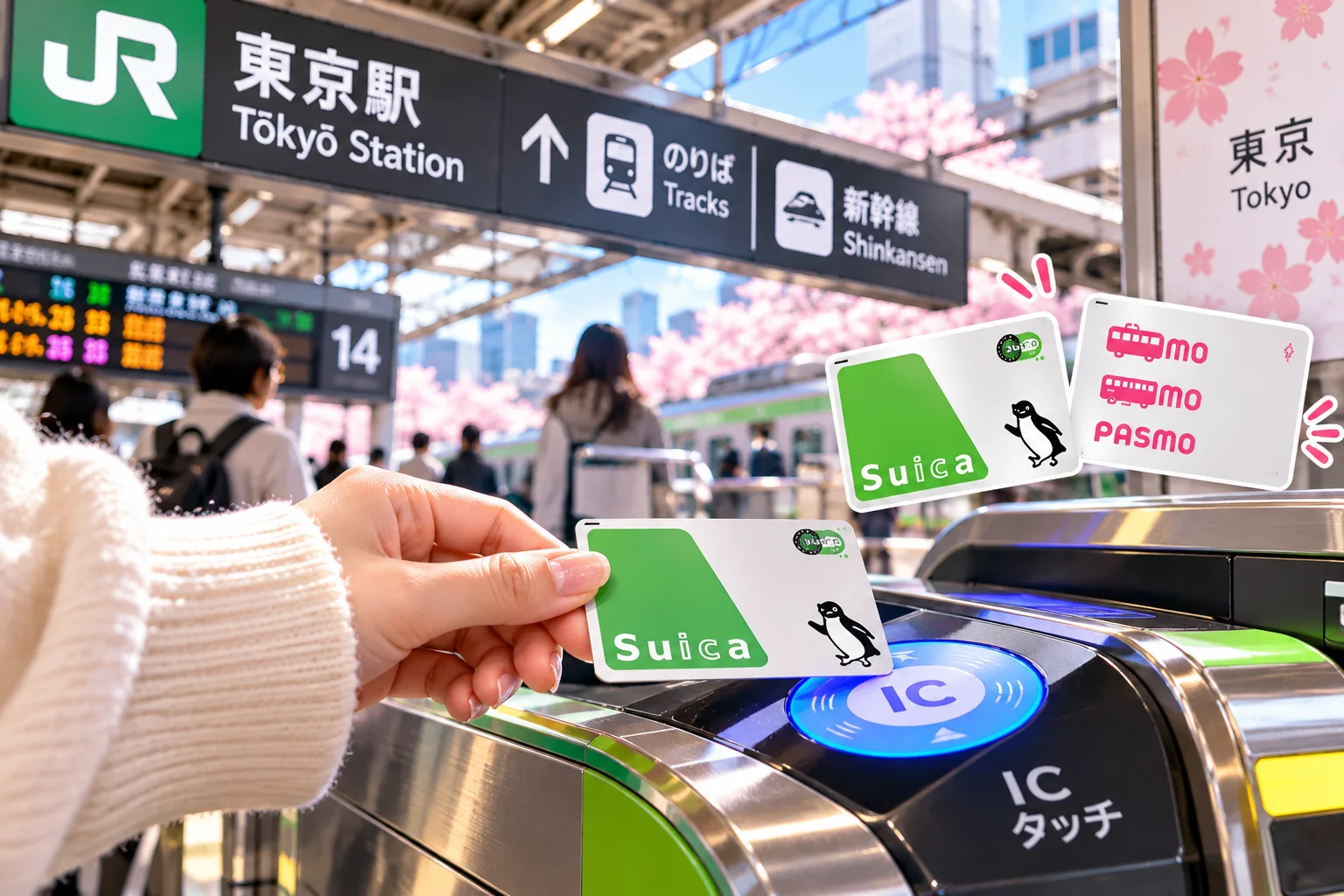
An IC Card is a prepaid transportation card that makes traveling by train and bus more convenient. Instead of buying an individual ticket for every journey, you can tap your card at supported ticket gates or card readers.
Popular IC cards include:
-
Suica
-
PASMO
Other IC cards are available in different regions of Japan.
In addition to public transportation, supported IC cards can be used at many convenience stores, vending machines, shops, and other participating services.
However, acceptance varies by location and transportation provider, so check whether your card is supported before traveling.
Should Tourists Use an IC Card in Japan?
If you plan to take trains and buses several times a day, an IC card is a convenient option because it makes paying fares quick and easy.
According to the Japan National Tourism Organization (JNTO), many IC cards can be used across different regions on compatible transportation networks. Special cards for international visitors are also available, including Welcome Suica and TOURIST PASMO, which do not require a refundable deposit.
However, availability, purchase locations, validity periods, and other conditions may change. Check the latest information before your trip.
An IC card is particularly useful for everyday transportation within cities, while separate tickets may still be necessary for certain journeys.
Buses in Japan
Buses are an important part of Japan's transportation network, particularly in areas where train stations are not close to tourist attractions.
In Kyoto, for example, visitors often combine buses and trains to reach temples, historic districts, and other sightseeing locations. In rural areas, buses may be one of the main transportation options available.
Before boarding, check the bus stop, route number, destination, and payment method. Boarding procedures and fare systems can differ between regions and operators.
Not all buses accept IC cards, so look for the IC card symbol or check the operator's instructions before traveling.
Taxis in Japan
Taxis are a convenient option when trains or buses are difficult to access, especially when traveling in a group or carrying large amounts of luggage.
According to JNTO, taxis in Japan are generally known for their high service standards and reliable metered fares.
However, payment methods vary. Many taxis in major cities accept credit cards, while some taxis in rural areas may accept cash only.
For this reason, it is a good idea to carry some Japanese yen as a backup payment option.
Although taxis are generally more expensive than public transportation, sharing a taxi with several people may be convenient for certain journeys.
What Is the Japan Rail Pass?
The Japan Rail Pass (JR Pass) is a rail pass available to eligible international visitors under specific conditions. It allows travel on designated services within the participating JR railway network.
The nationwide pass is available for 7, 14, or 21 consecutive days and comes in two main seating classes: Ordinary and Green Car.
However, the nationwide JR Pass can be relatively expensive, so you should not automatically buy one simply because you plan to visit several cities. Compare its price with the cost of purchasing individual tickets for your intended routes before deciding.
Japan Rail Pass Prices
The following are the published adult prices for purchases through the official online purchasing service:
| Pass duration | Ordinary Car | Green Car |
|---|---|---|
| 7 days | ¥50,000 | ¥70,000 |
| 14 days | ¥80,000 | ¥110,000 |
| 21 days | ¥100,000 | ¥140,000 |
Note: Prices depend on the purchasing channel. Prices through designated overseas travel agencies differ from the official online prices. From October 1, 2026, the overseas agency prices increased to ¥53,000, ¥84,000, and ¥105,000 for 7-, 14-, and 21-day Ordinary passes, respectively. Check the official website for the latest prices and conditions before purchasing.
Official website: Japan Rail Pass — Types and Prices
Do You Need to Buy a Japan Rail Pass?
Not every traveler needs a Japan Rail Pass.
If you are staying in Tokyo or visiting only Tokyo, Kyoto, and Osaka, purchasing individual train tickets may be more economical, depending on your itinerary.
Before buying a pass, compare:
-
The cost of individual Shinkansen and train tickets for your planned routes.
-
The total cost of the Japan Rail Pass for the same travel period.
Consider how many long-distance journeys you will take, how long you will stay, and which railway services you intend to use.
The best option depends on your actual itinerary rather than the number of cities alone.
Should You Reserve Shinkansen Tickets in Advance?
For popular routes and busy travel periods, reserving your Shinkansen seat in advance can make your trip easier to plan.
Advance reservations are particularly useful if you are traveling in a group, want to sit together, or need to arrive at your destination at a specific time.
If your schedule is flexible, you may have other suitable ticket options depending on the route and train service.
Always check the reservation rules, seat availability, and ticket conditions directly with the railway operator for your chosen route.
Can You Use a Credit Card to Pay for Trains in Japan?
You should not assume that every railway or subway system in Japan accepts credit cards directly for fares.
JNTO notes that credit cards can be used to pay for certain transportation services and tickets, including the Narita Express and Shinkansen. However, credit cards are not accepted for every short-distance train or subway journey.
Payment methods vary by railway operator and ticketing system. In many cases, an IC card is a more convenient option for everyday travel within cities.
Before your trip, check the available payment methods for the trains and routes you intend to use.
Which Apps Should You Download for Traveling in Japan?
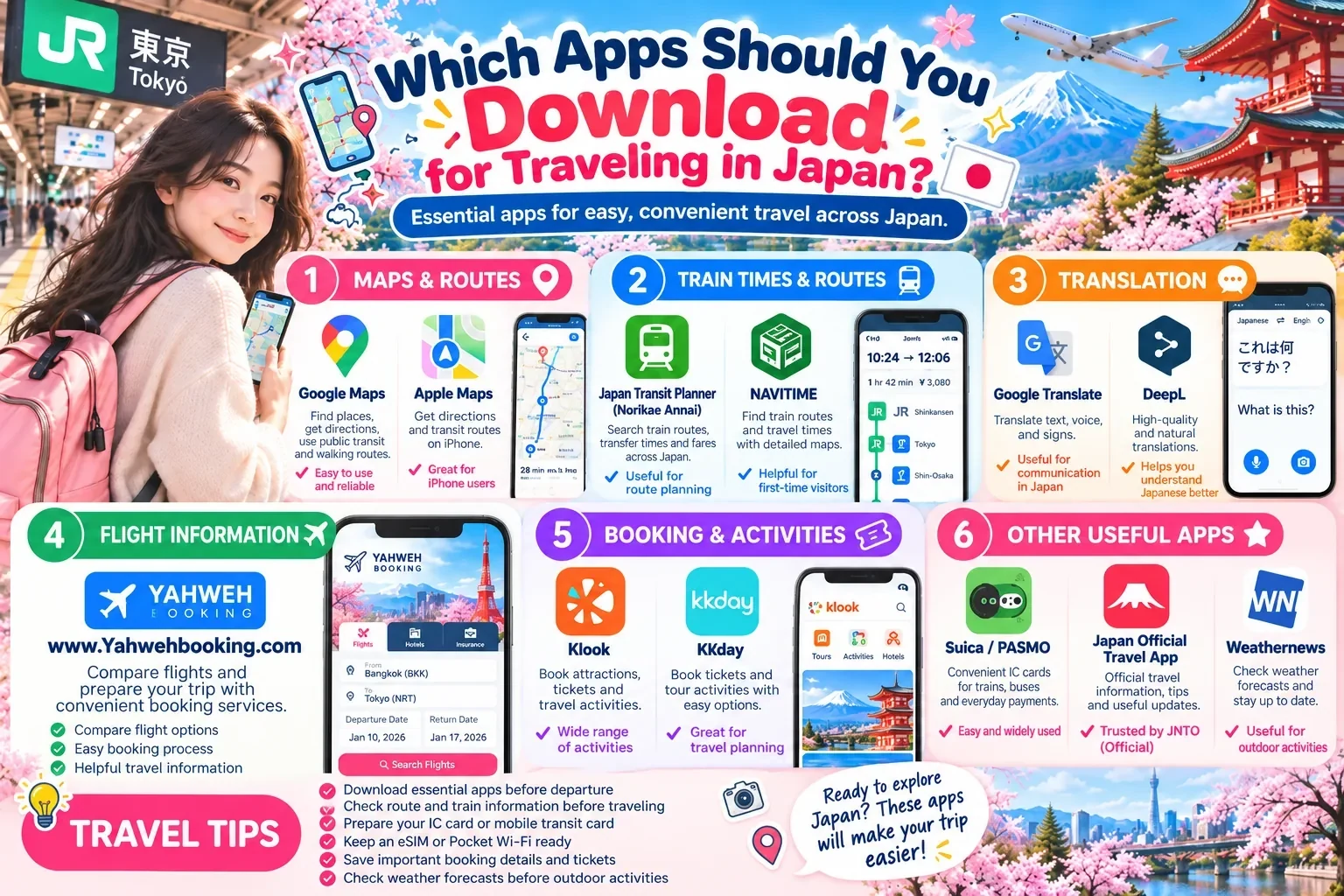
Travel apps can make navigating Japan much easier, especially if this is your first visit or you plan to travel between several cities.
Consider preparing apps or services for:
-
Maps and route planning
-
Train schedules and transit connections
-
Language translation
-
Flight information
-
Ticket reservations
JNTO recommends route-planning tools such as Japan Travel by NAVITIME, Japan Transit Planner by Jorudan, and Google Maps.
Download the apps you need and familiarize yourself with them before departure. This can help you navigate stations, check connections, and adjust your itinerary more efficiently.
What Should You Prepare Before Traveling Around Japan?
Before your trip, use the following checklist to prepare for a smoother journey:
-
Check your planned routes in advance.
-
Confirm your departure and arrival stations.
-
Find out whether you need to transfer between train lines.
-
Prepare an IC card if it suits your itinerary.
-
Check your Shinkansen tickets and seat reservations.
-
Allow enough time for transfers between trains.
-
Carry some Japanese yen for backup payments.
-
Allow extra time to reach stations and find your platform.
-
Check luggage arrangements for long-distance journeys.
If you are traveling with large suitcases, plan how to manage your luggage in advance. Navigating large stations, using stairs, and making multiple transfers can be tiring, particularly during peak hours.
Depending on your route, luggage delivery services or luggage storage facilities may also be worth considering.
Summary: Getting Around Japan
Japan offers a wide range of convenient transportation options, including trains, subways, buses, Shinkansen bullet trains, and taxis. These services make it possible to explore major cities and travel to many regions throughout the country.
For first-time visitors, the following options are a useful starting point:
IC Card
For convenient payments on supported local trains, buses, and small everyday purchases.
Shinkansen
For fast, long-distance travel between cities.
Trains and Subways
For getting around cities and reaching major tourist attractions.
Rail Passes
Choose a pass when it offers good value for your specific routes and travel dates.
The most important step is to plan your routes in advance and group attractions by area. This helps reduce unnecessary travel time and leaves you with more time to explore Japan.
Explore More Japan Travel Guides
Planning a trip to Japan? Explore our Japan travel guide for popular destinations, travel tips, and useful information before departure.
Plan Your Trip to Japan with Yahweh Booking
Yahweh Booking helps make travel planning easier with flight bookings, hotel reservations, travel insurance, and useful information to help you prepare for your journey.
Start planning your trip to Japan with Yahweh Booking today.
Train schedules, fares, IC card availability, and rail pass conditions may change. Always check the latest information on official railway operator websites before traveling.